
The serotonin hypothesis of depression has not been confirmed
Last modified: 19-04-2026
The hypothesis that depression is caused by decreased serotonin levels in the brain was put forward in the 1960s, and although it has never been confirmed, it permeated the mainstream and began to be treated as a certainty, even by many doctors and psychologists. A review of scientific studies from 2022 clearly shows that over these several decades, data confirming the validity of this thesis has not been gathered.
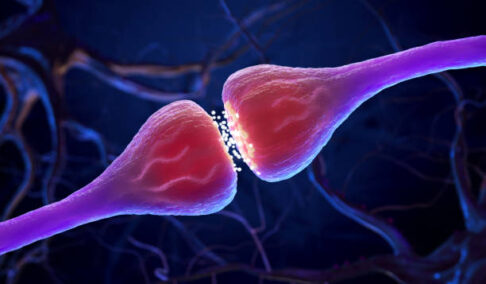
The serotonin hypothesis was initially supported by the effectiveness of antidepressant drugs from the SSRI group, which appeared on the market in the 1990s. These are selective serotonin reuptake inhibitors, which keep serotonin in the space between nerve cells, thereby increasing its level. “Since such drugs help with depression, the cause of depression must be a lowered level of serotonin” – this was the reasoning at the time, but it was only a hypothesis that required confirmation in scientific research.
Over the years, some studies emerged supporting the hypothesis of too little serotonin in the brain, but there were also those that did not support it. Which studies are more numerous and which are methodologically better? This question was answered by a review of scientific publications conducted by Joanna Moncrieff and her collaborators.
The researchers focused on six issues addressed in scientific studies.
- Serotonin and the serotonin metabolite 5-HIAA – whether people with depression have lower levels of these chemical compounds in body fluids.
- Serotonin receptors – whether their levels are altered in people with depression.
- Serotonin transporter (SERT) – whether the level of this protein is higher in people with depression (a higher level of the transporter would decrease serotonin levels in the synaptic clefts between nerve cells).
- The SERT gene – whether polymorphism of this gene is associated with the occurrence of depression.
- Whether there is an interaction between the SERT gene and stress in depression.
- Tryptophan – whether lowering its level (which lowers serotonin levels) can induce depression.
Studies of serotonin and its metabolites in plasma, as well as studies on the influence of the SERT gene and its interaction with stressful conditions, showed no association between markers of serotonin activity and depression.
Studies on serotonin receptors and the SERT protein (serotonin transporter) showed that depression may be associated with increased serotonin levels, contrary to the hypothesis. However, the certainty of these results is low, mainly due to the small group of people studied and the fact that during the study or earlier they were taking antidepressant drugs, which could have increased their serotonin levels.
Some studies have shown that reducing tryptophan levels can induce symptoms of depression in people susceptible to the disease (e.g., it occurred in their family). Here, however, also due to methodological shortcomings, these results should be treated with caution.
So what causes depression and how do antidepressant drugs work?
It is unknown. There are various hypotheses, some more tested, others less.
SSRI drugs generally lower the experience of emotions (both negative and positive), and this may influence the improvement of the condition of people with depression. In recent years, a lot of research also shows that antidepressant drugs affect neuroplasticity, and this may be the mechanism that reduces symptoms. There are also data showing that the effectiveness of antidepressant drugs is at a similar level to that of placebo, especially in mild depression. I wrote about this topic once in an article about whether antidepressant drugs are just placebo. Perhaps not for everyone, but certainly for some people improvement occurs due to the placebo effect.
It is also not clear what causes depression to develop. One interesting area of research that has been developing in recent years is gut bacteria. I wrote about this a few years ago in the article Abnormal gut microbiota may influence anxiety disorders and depression. It is also not certain that in all people with depression it is associated with the same biological mechanism. In one person, a given mechanism may be important, while in another, the same symptoms may be caused by something else.
References
Moncrieff, J., Cooper, R.E., Stockmann, T. i inni (2022). The serotonin theory of depression: a systematic umbrella review of the evidence. Molecular Psychiatry 28, 3243–3256.
Author: Maja Kochanowska
 Thank you :)




Add comment