
Recommended in this month




Newest posts


Holidays Our Way – Cross-cultural Psychology of the Tourism
Tourism is often presented as a universal experience – everyone wants to relax, see new places, and learn about other cultures. However, psychological research shows that travel styles differ significantly depending on culture.
Read more
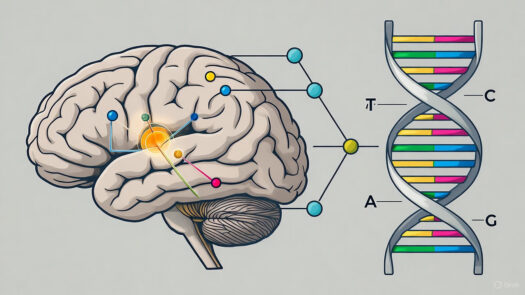
The Common Roots of Mental Disorders: Genes and Neural Networks
In psychiatry, disorders are traditionally studied separately. So we have a lot of research on depression, a lot on generalized anxiety disorder, etc. However, clinical practice shows that mental disorders often do not occur alone. As many as half of patients have at least two mental disorders simultaneously. The latest research shows that these same […]
Read more
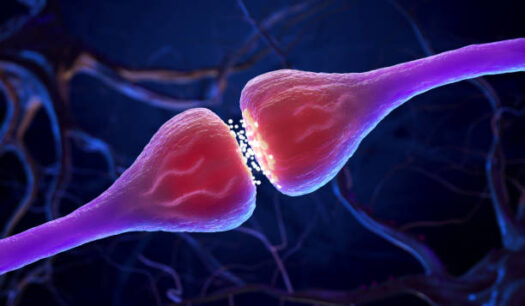
The serotonin hypothesis of depression has not been confirmed
The hypothesis that depression is caused by decreased serotonin levels in the brain was put forward in the 1960s, and although it has never been confirmed, it permeated the mainstream and began to be treated as a certainty, even by many doctors and psychologists. A review of scientific studies from 2022 clearly shows that over […]
Read more

Disorders that co-occur with autism spectrum disorder
Autism spectrum disorder is diagnosed based on deficits in communication and interaction with other people and the presence of restricted and repetitive behaviors, interests or activities. But that’s not all. People with autism often struggle with co-occurring problems, including mental disorders, sleep disorders, digestive system disorders, ADHD, and epilepsy.
Read more

Time perception in children and adults
Time is the fundamental dimension we use to coordinate our social interactions and organize our memories and plans. How do we estimate time? How does the sense of time differ between children and adults, and at what age do we begin to perceive time similarly to adults? Sandra Stojić and her colleagues tried to answer […]
Read more

Lavender – a natural anti-anxiety agent
Lavender is known as a plant that has a calming effect and this is confirmed by scientific research. Most data indicate its beneficial effect in times of stress, but it may also help some people suffering from anxiety disorders. It may also improve sleep quality and reduce depressive symptoms that co-occur with anxiety.
Read more

SSRI antidepressants reduce the ability to reinforcement learning
Approximately 40-60% of patients taking SSRIs experience the so-called emotional blunting, i.e. they feel both negative and positive emotions less strongly. The latest research indicates that the reason may be a weakening of sensitivity to feedback, including rewards.
Read more

Artificial intelligence may soon be better at diagnosing schizophrenia than humans
Schizophrenia is more than just delusions and hallucinations. People with this mental illness also often have speech and thinking disorders that can be detected by artificial intelligence based on the analysis of their speech. And as it turns out – artificial intelligence can be better at this than psychiatrists and psychologists.
Read more

Autism or alexithymia?
Alexithymia, or difficulties in recognizing and naming emotions, very often co-occurs with the autism spectrum disorder. So often that it is confused with it, which leads to incorrect stereotypes about autistic people.
Read more

Salt – how it affects the brain and why we need it
Almost 40% of table salt is sodium. It is the largest source of sodium in our diet. Its excess is unhealthy for many organs, but too little salt is equally harmful. Without sodium, our brain cannot function.
Read more
