
The Common Roots of Mental Disorders: Genes and Neural Networks
Last modified: 19-04-2026
In psychiatry, disorders are traditionally studied separately. So we have a lot of research on depression, a lot on generalized anxiety disorder, etc. However, clinical practice shows that mental disorders often do not occur alone. As many as half of patients have at least two mental disorders simultaneously. The latest research shows that these same disorders often share a common neurobiological and genetic basis.
A common neural network in six disorders
The neurological basis is confirmed by a 2023 study published in “Nature Human Behaviour.” Scientists from Brigham and Women’s Hospital analyzed a meta-analysis of 193 studies with over 15,000 people, comparing patients with six disorders – schizophrenia, bipolar disorder, depression, addiction, OCD, and anxiety – with a control group.
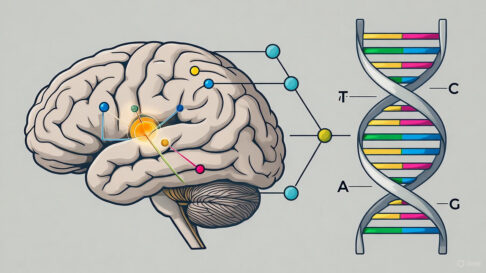
They discovered atrophy (reduction) of gray matter in areas such as the insula, dorsal anterior cingulate cortex, prefrontal cortex, thalamus, amygdala, hippocampus, and operculum. But the key was mapping the network: these points connected into one common brain network.
This network includes positive connections (insula, anterior cingulate cortex, posterior cingulate cortex, left frontal pole) and negative connections (right inferior temporal lobe, posterior parietal cortex, bilateral occipital cortex, brainstem, cerebellum). The strongest peak is in the posterior parietal cortex (Brodmann area 7).
As Joseph Taylor, a psychiatrist at Brigham, explains, mental disorders share neurobiology, which explains their co-occurrence. Instead of symptom lists, focusing on networks could improve diagnoses and treatment, for example via magnetic stimulation.
Genes linking eight disorders
Genetic research reveals that eight common mental disorders – autism, ADHD, schizophrenia, bipolar disorder, depression, Tourette’s syndrome, OCD (obsessive-compulsive disorder), and anorexia – share the same “hot spots” in the genome. In 2019, an international team from the Psychiatric Genomics Consortium, Harvard University, and the UNC School of Medicine discovered 136 locations in the genome where genetic variants have a causal impact. As many as 109 of these are pleiotropic, meaning they are common to many disorders.
In a recent study published in “Cell” in 2025, scientists led by Hyejung Won and Patrick Sullivan at UNC analyzed 17,841 genetic variants from these spots. They identified 683 variants affecting gene regulation, the process controlling protein production in the body.
These variants were divided into two groups: pleiotropic (common to many disorders) and disorder-specific. It turned out that pleiotropic variants are more active, sensitive to changes, and act longer during brain development. They affect multiple stages of neurogenesis, potentially causing protein overproduction or disruptions in synapse formation. Genes affected by them are particularly vulnerable to disruption, and the proteins produced form dense networks – a change in one can ripple through the entire brain.
Implications for the future
These findings suggest that mental disorders are not separate – their genetic variants and neural networks overlap, explaining co-occurrence. Pleiotropic variants, active longer in development, and the common brain network open the way to transdiagnostic therapies: drugs or stimulation targeting these elements, treating multiple disorders simultaneously.
Although the research does not immediately change clinical practice, it underscores the need for a holistic approach. Future clinical trials may focus on these targets, offering hope for more effective treatment.
References
- Psychiatric Illnesses Share Common Brain Network, MedScape
- Eight Psychiatric Disorders Share the Same Genetic Causes, Study Says, UNC School of Medicine
Author: Maja Kochanowska
 Thank you :)


Add comment