
Category: Neurobiology


Face blindness or prosopagnosia
It seems obvious to us that we recognize our friends, neighbors and family, we can see them in a group of strangers and recognize them even if they change their hair style or dress. However, there are people for whom this is a problem. Prosopagnosia, i.e. the inability to recognize a face, can make life […]
Read more

Omega-3 fatty acids and mental health
It is widely known about the beneficial effects of omega-3 fatty acids on the cardiovascular system, but not everyone knows that these compounds also have a positive effect on mental health. The nervous system contains over 60% fatty acids, of which 30% are polyunsaturated fatty acids, which include omega-3 fatty acids. They take part in […]
Read more

20 Psychology Myths
In society, many myths concerning various branches of psychology are commonplace. I would like to refute some of them and pass on knowledge in line with scientific research. You will also find out where some myths come from and why they are so popular.
Read more

Savant syndrome – unusual abilities due to disability?
The twins John and Michael were able to say what happened and what was the weather every day of their lives, since they were four years old. They were able to repeat even a 300-digit number and specify what was or will be the day of the week on any day of the 40 000 […]
Read more

Therapeutic hallucinogens
Already in the 50’s it was noted that psychedelic drugs, also called hallucinogens may have a therapeutic effect. Some studies of these years have shown that these substances can be helpful in treating addiction and alleviate the psychological suffering of terminally ill patients. In the 60’s, researchers in the US found that LSD and DPT given […]
Read more

Why it is worth to sleep
For those who believe that it is a waste of life to sleep, because “they will sleep after death” – a new article. About why it is better though to have enough sleep during life. Lack of sleep negatively affects mood, motivation, social and emotional skills, communication skills, creativity, memory, decision-making ability, immune system, cardiovascular system and even […]
Read more

Near Death Experiences
Probably everyone has heard from more or less reliable sources about people who have survived clinical death and their stories about watching their body from the top, the light in the tunnel, and other mysterious experiences. Some argue that these experiences are proof of life after death, others treat such stories as fairy tales, and yet […]
Read more

What causes migraine?
The cause of migraine may be malfunctioning of the brain stem nuclei, which are responsible for inhibition of trigeminal nerve, which in turn causes migraine. The brain stem can also cause so-called cortical spreading depression (CSD) associated with aura, which in some patients precedes the attack.
Read more

Neurobiology of empathy
Psychology distinguishes between two types of empathy. From the perspective of emotions empathy is the ability to empathize emotional states of other people, but from the cognitive perspective – the ability to understand the beliefs, feelings and intentions of others. Empathy is a complex process, which involves at least two paths: “bottom-up” and “top-down”. The […]
Read more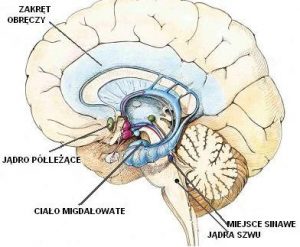

The stress response
The two main biological systems involved in stress response, ie. the sympathetic system and the hypothalamic-pituitary-adrenal axis (HPA), I described in the article Biology of stress. Now a little bit more about corticoliberin, as well as the locus coeruleus in the brainstem, dopaminergic and serotonergic system and the amygdala, hippocampus and prefrontal cortex. Corticoliberin (Corticotropin-releasing hormone […]
Read more
